The Claddagh At Evening

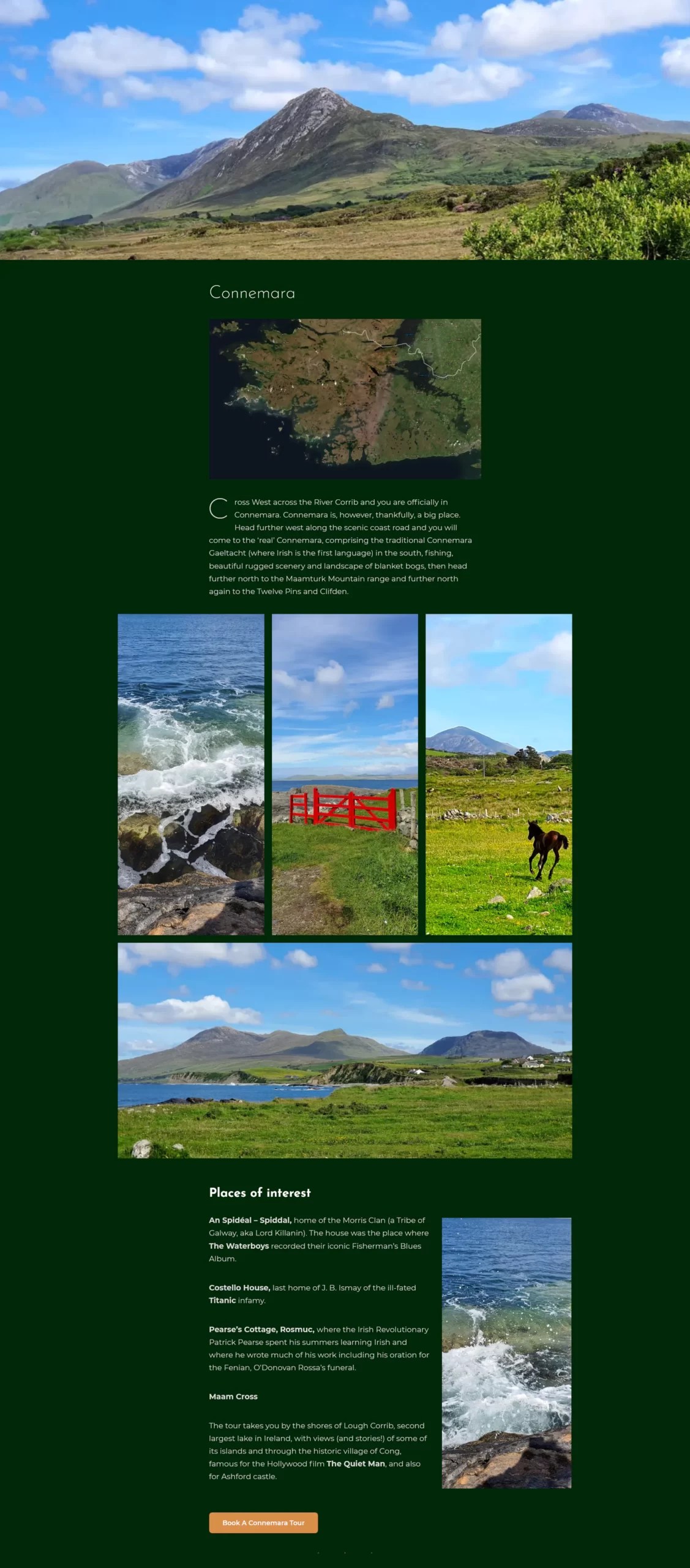
Let’s have a break from the politics and return to the quiet beauty of the Claddagh, Galway’s historic fishing village.

Sunset in the Claddagh. The rightmost of the buildings we used to call the Claddagh Bank, back when it was a social welfare office. Before that it was the Piscatorial School, an institution for the education of fisher-folk.

Where there’s boats, there’s ropes. Or sheets, as sailors call them. In turn, sailors call sheets “sails”. This is where they get their name.  I should get PhotoShopping on this to bring out the contrasts, but I’m really tired. This was at the start of a walk that ended up taking three hours.

A similar angle to one I took last time, but now the higher tide completes the illusion.

, , , , , ,

Leave a Comment

What If We Voted No? Your Questions Answered

Irish Times clock on the new building at Towns...

Sign Of The Times. Geddit? God I’m Stuck For An Illustration Today

Yesterday’s post about Ireland’s alternatives to the ESM elicited such a bunch of interesting questions it would really take all day to answer them properly. So that’s what I’ll do.

Ciarán Ferrie of Ireland pointed out:

I found a disturbing little nugget in the fourth paragraph of Paul Gillespie’s opinion piece in the Irish Times on Saturday – In effect, if we vote NO to the treaty, not only will we not be able to draw down funds from the ESM but we will still be obliged to contribute to its initial capital. I think Vincent Browne may have alluded to this double-bind on his show a couple of times but I’m only just realising the implications of it.

I’m assuming that this was agreed before the AG dropped the bombshell of the requirement for a referendum and that the government had assumed they could push the treaty through the Oireachtas unchallenged. Whatever the reasons it puts us in an invidious position with regard to the ESM in the event of a NO vote.

True, but having a chance to claw back what we pay in is hardly a good reason to vote Yes. Really, this is a much better argument for not ratifying the ESM treaty at all.

Which is still an option (even leaving aside the Pringle case, which may yet decide that they can’t ratify it without another referendum), and I think this amendment failing would provide the government with the perfect pretext not to.

They may well do it anyway though – to bolster Ireland’s boy-scout europhile reputation (what good did that do us again?) and to not rock an already waterlogged boat. €1.27 billion over the next three years seems almost like small change compared to our deficit. Though of course that does rather overlook the fact that we’re liable for anything up to €11 billion – in the unlikely event of anyone, you know, actually needing a bailout.

Regular reader Azijn from The Netherlands said:

You mention several times that under the ESM you wouldn’t be able to “invest in growth”. I don’t really understand what you mean by this. What is the precise ESM policy that prevents this? I thought it was mainly a severe constraint on the budget, with very strict rules about the size of deficit spending. (Just like the IMF would).

To deal with this bit first: The EMS – or more correctly the Fiscal Compact we must join to enter it – will compel us to cut government spending at nearly twice the pace we’re already slashing away. Even leaving the immediate human cost aside for a moment, this will have the effect of further shrinking the economy, further reducing the tax take… A vicious cycle looms.

The way to break that cycle would be to borrow and spend as soon as possible to stimulate growth; classical Keynesianism. The IMF – or of course commercial lenders – would have no ideological objection. The Fiscal Compact however requires that, with some leeway for cyclical fluctuation only, governments borrow no more than 0.5% more than income. In other words it bans Keynesianism in perpetuity, for no better reason apparently than German mistrust of it (as I discussed here).

Aside that, you provide a very clear analysis of all the options. It’s sadly clear that all the options, including your preferred one, have major downsides. There’s no silver bullet for the economic problems of Ireland. Or Europe, for that matter.

Especially, because it’s not just conjuncture and aftermath of the mega-losses in the housing and financial markets. A big problem is that while all this is going on, all European countries are concurrently facing the huge (huge!) increases required to simply keep up expenditures in healthcare and retirement funding.

That’s where the biggest pain of ‘austerity’ is felt, but I always find it a tough topic. On the one hand, it’s easy to depict those cutting in the healthcare and retirement budgets as “robbing the sick and elderly”. On the other, it’s a reality that these (often overlapping) groups are experiencing skyrocketing costs.

If any of the “nuclear” options, such as leaving the Euro are chosen, these people will _still_ be among the hardest hit. Also, is it fair to ask younger generations to display solidarity for the elderly, but not ask it all of the elderly?

Well I’m seeing it quite differently. The sick and elderly are my highest priority, and I wouldn’t be suggesting these nuclear options unless I thought they would be better for the vulnerable in society than the merciless constraints of the Fiscal Compact.

Our economy is healthy by the measure that matters most – balance of payments. We ought to be able to raise more money to prevent the sick and elderly getting the brunt of this. To a great extent, it’s Euro membership that is tying our hands. A major factor scaring lenders off now is the possibility that the Euro could collapse, or that we’d crash out of it. If we get that over with, we suddenly become a far more attractive risk. (And of course, our balance of payments gets even better.) It would be hugely disruptive and scary, but very probably preferable to slow economic constriction.

I don’t know what you really mean by solidarity on the part of the elderly though. We’ve already raised the retirement age, I’m not sure what more they can do. Unless you’re subtly suggesting we try legalizing assisted suicide here…

I answered this one yesterday, but I include that here, with a little expansion, for completeness. Hilary Chapman (no known relation) from the UK asks: 

Would it not be best for Ireland to share the currency of Northern Ireland, Scotland, Wales and England, i.e, the pound / punt? Ireland’s economy is so tied up to that of its near neighbours that the euro is an aberration.

That would be a hugely retrograde step. The old Irish pound was pegged to the UK pound from independence until the mid-70s – not exactly an era of sparkling economic performance. A currency union tended to steer business towards or through the UK, only exacerbating the geographic disadvantage of having a larger country effectively sitting between us and the wider world.

So the general thrust of policy for decades has been to untie the economy from our nearest neighbours! Mainly, by finding new trading partners. (And whatever about its downsides, the Euro has definitely been a help in this.) Decades of separate development have made the UK’s importance for trade much smaller than you may think.

You will see shops in Ireland full of UK brands (and indeed, high streets full of UK chains); we certainly do still import a huge amount of retail goods from there. But that may give a misleading impression. From getting virtually 100% of our imports from the UK at independence, we now source less than a third there. In exports we send more goods to the Eurozone, and the US has long overtaken the UK as our single biggest customer.

We may have troubles right now, in other words, but there’s really no going back.

*      *      *

If we do leave the Euro we would first of all devalue significantly of course – but then I think we’d start shadowing it again, with a view to eventually rejoining. I would certainly prefer though if we could rejoin – or stay in – a much modified Euro. One better geared for the benefit of the EU as a whole, less engineered for Germany’s particular insecurities.

I do sincerely sympathise with German concerns however. Inflation, in post-crash circumstances not so different from those now, is seen as a major contributing factor to the collapse of democracy in the 1930s. But preventing the currency inflating doesn’t make the causes of that economic dysfunction vanish. In inter-war Germany, these were largely the heavy burden of debt and restrictions on self-determination imposed on the country by its neighbours, whereas now…

Hmm.

, , , , , , ,

1 Comment

So Where Do We Get The Money?

Cover of "Irish Gold (Nuala Anne McGrail ...They tell us we have to vote Yes to access ESM (European Stability Mechanism) funding, in case we ever find ourselves unable to meet current expenditure. But will it really be our only option? It had better not be – the ESM may never come into being after all. Would it be the best? Only in the sense that it might be cheapest. As I argued yesterday, in every other way it is probably the worst option conceivable, less a loan mechanism than a sort of national receivership. I do not believe we can meet its terms.

So what are the other, officially-denied options? You could categorise them in different ways, but I basically see five. I put them here in not my preferred order, but in what I think is roughly the order of likelihood that they’ll be resorted to (though likeliest of all I think is two or more in combination):

1) The EFSF (European Financial Stability Facility). This is the fund we’re currently availing of for the EU/IMF bailout, and though the ESM with its stricter and (it is hoped) more sustainable rules is meant to replace it, the EFSF will continue to exist for more than another year. Hopefully in that time it will become clear whether we need to borrow more.

2) The IMF (International Monetary Fund). The IMF may have a reputation for setting tough conditions on loans, but unlike the ESM it has no entrenched ideological opposition to countries investing in growth. Some argue that they would refuse to loan to countries that the EU had refused, but the organisation itself has not pronounced either way. And as a partner in our current bailout, the IMF has invested in us already. It is not known for letting its investments go bankrupt.

3) Leaving the Euro. Get out in some semi-ordered way, before we’re forced out precipitously like Greece could be any day now. Devaluing our currency rapidly would solve a lot of our problems, but it would not be painless; imports would leap up in price, effectively making us all poorer immediately. But it would be a huge boost for industry and jobs, sparking immediate actual growth. Indeed, much as I am in favour of the single currency in (broad) principle, it is virtually undeniable that we’d be better off now if we’d never joined. Its inertia has only served to exacerbate both boom and bust.

4) Debt Repudiation/Restructuring. The nuclear option to some, the obvious first step to others. In part this is because we have two main sources of debt, so morally different that they need to be taken separately:

(a) Bailout Debt. However pressured we may have been when we agreed to this, there is a strong moral imperative to, you know, do what we said we’d do. But that is not the highest of all values. Debt repayment does not trump such imperatives as, say, not letting people starve. You can always repay a debt later, but people die for good. No one claims it wouldn’t be a drastic step. It is bound to have negative consequences on other countries, and after we did it we’d be pretty much on our own. But remember the adage – if you owe the bank a million, they have a problem. We shouldn’t be afraid to contemplate default if it can win us better terms.

Most likely of course 3 and 4 would need to be done together, as debts denominated in Euros would be so much more painful if we’re paying in Irish Fairy Gold or whatever. (If we’re getting a new currency we may as well have some fun with it). And by the same token, if we aren’t repaying our debts I think the Eurozone would prefer if we got the hell out.

(b) Bank Bondholder Debt. This though we should have repudiated long ago. The taxpayer has no conceivable moral duty to repay this private debt. And if the European banking industry will collapse if they don’t, then quite frankly the European banking industry deserves to collapse. Let’s call their bluff on this one.

5) Taxing the rich. This is last on a list in order of likelihood because of course the rich have considerable influence over these decisions, though in a sensible democracy it would be first. It has been pointed out that with only a moderate tax on capital and/or a new upper tax bracket we could pay off our debts without making cuts at all. That may be unrealistic, but could very significant new revenue be raised without causing capital flight or discouraging investment? I think it could. There is money to be made here, all we’d be doing is raising the price of making it. I think the market can bear that.

And let’s not forget that the richest have been consistently increasing their share of the wealth, while simultaneously reducing their tax contribution, since the 1980s. If they don’t start paying their share again now when will they start?

~    &    ~

Well OK, the obvious next question is if all these alternatives exist, why does the government prefer the one that will wreak such havoc?

The answer has to be that they don’t really believe what they are asking us to sign. The draconian terms of the agreement are there to convince the money markets that they won’t profit by breaking up the Euro. In the real world exceptions will be made, just as they were made for Germany when they were in trouble. Right? Perhaps we can fudge what is and isn’t structural deficit; no one seems to know quite what that means so it’s a useful bit of ambiguity. Surely, when it comes down to it, we cannot be held to borrowing limits and repayment rates that would wreck our economy?

Perhaps they sincerely believe that, perhaps it’s even true. But to sign your name to a contract on the basis that you hope it will never be enforced is, to put it mildly, unwise.

, , , , , , ,

7 Comments

Rabbit Of Government Versus Truck Of Euro

So having looked at the reasons to reject the Fiscal Compact, let’s examine the government’s pro-treaty arguments.


Fiscal Compact in Ireland - YES Campaign [MEP] Olle Schmidt support

But fear not, here’s the opposi… oh

Well that didn’t take long. Really there is no positive argument beyond the stability of the Euro. As good a thing as that might be, it seems a trifling technicality when compared with the very real and immediate suffering the treaty would impose. So it is perhaps not surprising that the government has focused instead on reasons not to vote no. Effectively they’re reduced to the null argument: Well what would you do? If we need more money, how would you raise it?

By asking this they hope to split opposition. Different opponents of the treaty have different ways they’d prefer to raise income, and if they can move the debate on to that then people may forget it’s not the urgent question. It’s like someone driving straight at an oncoming truck and saying “Well which way would you swerve?” The government’s case rests almost solely on the argument that we may require aid from the European Stability Mechanism (ESM), and that this would be preferable to other loan options. But that’s actually composed of two questionable assumptions:

Firstly, we are obviously going to avoid another “bailout” if we at all can. The necessity will depend very much on global markets, how fast we can regrow our economy and so on. The really mad thing here is that if we sign up for the Fiscal Compact, the restrictions it will place on our opportunities for growth make it so much more likely that we will need a further emergency loan.

If we do, will the new ESM be the best lender? Well it will almost certainly offer the lowest interest rates going – for sure lower than any we’ll be able to get on the open market for a long time. The problem is the  conditions. Obviously the ESM won’t lend us money to invest in growth, because that’s what the whole Fiscal Compact is ideologically opposed to. We can borrow to pay for emergency things, like public wage bills or – irony warning – loan repayments we can’t meet, but not to invest.

And the mad part of this is that if we do sign the treaty, we are committing ourselves to these conditions even if we borrow from somewhere else. Even if we raise funds on the open market, even if we go to the IMF, even if the European Social Fund never comes into existence – which is a very real possibility – we still have a commitment not to borrow to invest, on pain of having our budgets dictated to us. Joining the Fiscal Compact is agreeing to abide by the conditions of a loan we may never get. Who does that?

Quite opposed to there being no other option for funding except the ESM, there is almost an embarrassment of of them. None of them is a picnic of course, but I would argue that any one of them is preferable to the Fiscal Compact. This post is already too long, but tomorrow let’s play the government’s game and see what other options we have apart from destroying our own economy just to be obliging.

, , , , , , ,

2 Comments

Burning Our Future To Fuel The Past

The panel of Why You Should Vote No!, a discussion organised by the Campaign Against the Austerity Treaty in Galway.  Big budget stuff this ain’t.

Well the optimism of Tuesday has been smartly kneed in the crotch. I will still apply for the course, but any hope of actually being able to do it without starving to death is rapidly receding. There is basically no money now to help people do postgraduate studies. No wait, I tell a lie. The exception is postgraduate-level teacher training. There is no funding to employ teachers of course, but you can still train to be one.

Since the last budget there will be no further grants or other maintenance aid for students continuing to the fourth level. So much for the knowledge-based economy. Austerity trumps that, like it’s trumped every other strategy and aspiration.

And this is just a taster. The government plans something like a further eight percent in cuts next year to meet borrowing reduction plans. Where will this come from? It’s hard to say. We’re already cutting deeply into the things, like education, that led to our economic growth in the past. Sure, I can get by without investment in myself to improve my earning opportunities. But the country as a whole?

We’re burning the future to fuel the past. Whatever cuts we make further affect our opportunities to recover and so reduce our ability to pay off our debts. They’re essentially counter-productive, and it goes without saying that they will also cause real harm to real people as health, welfare, pensions and services come under increasing pressure. The more we cut, the worse lives become, and the longer it’s going to stay that way.

But note that I’m talking about the government’s current plan. This is without taking the Fiscal Compact into account. If we pass that, we will be committing ourselves to repay debts at a significantly faster pace than the government apparently thinks possible right now. They accuse the No campaign of offering no alternative strategy, without even beginning to attempt to explain how we can meet the criteria the Fiscal Compact sets for us.

The truth is, we simple cannot meet those criteria. How much more will we have to cut back compared to current reductions? Nearly twice as much. Who believes for a moment that’s possible humanely, never mind politically?

But wait, what’s politically possible doesn’t matter any more! Because the treaty provides that if we are too merciful on our own population and fail to cut deeply enough, the Eurozone will be able to impose budgets on us – essentially turning our democracy into a puppet administration. And as this outcome seems pretty much inevitable, voting for the treaty really is voting to wind up Ireland as a meaningful state. You think a foreign administration we can never vote out can’t do a worse job than our own shower? I invite you to consider how that worked out in the Great Famine.

I do believe that we’ll need some sort of budget management agreement if – an increasingly big if – we continue to have a common currency. But the one we’re being asked to swallow puts the interests of the larger Eurozone economies so completely before our own that it amounts to tyranny. For their sake we are being asked to take actions that run absolutely counter to our most urgent needs.

This is an anti-overspending compact just when we desperately need to spend. It exists because other countries overspent in the past, not us. Compared to the European average we underspent. Compared to Germany and France, we were choirboys. Our problem was that we took too little tax from far too few people, creating a tax base that was utterly, idiotically dependent on the boom. We need more tax income, desperately. Slowing down the economy instead – and so further reducing the tax base – is fighting fire with ostriches. It’s insanity.

But the larger countries do not give a damn because they have their own problems. All the really care about is that the Euro doesn’t fall in value, because basically that’s what their wealth is in. There are no two ways about this. We are being asked to sacrifice ourselves – really, do something quite suicidal -  in order to be a bulwark for the Euro. Our reward for this? The right to apply for loans we may or may not need, at rates that may or may not be better than we can get elsewhere, from a fund that we have no guarantee is ever going to exist.

Are we fucking mad?

, , , , , , ,

1 Comment

The Claddagh At Low Tide

Well the last couple of days have been intense. So much so that I’m far too tired to tell stories now. Here then are some pictures, of Galway’s photogenic Claddagh. Where the rings come from.

Incidentally, a shout out to all the people who visited the blog from Switzerland today. I have no idea why you came, but I was very glad to see you.

, , , , ,

1 Comment

Protest Silenced For The Super-Rich

To be honest you can’t see much happening here, the encampment was around the corner. But that would seem to be because Guards (police) are preventing people from getting close enough to witness the break-up operation. The presence of the CSI van is also a little disturbing. What crime, exactly?

A shameful day for political freedom in this country. Occupy Galway – the last Occupy protest camp in Ireland – was uprooted this morning. The Council cite safety as a reason to suppress the protest. As ever. It’s simply counterfactual. Increasingly dangerous at night in recent years, Eyre Square became a friendlier place thanks to the constant human presence. That encampment was the best things to happen to the Square since they took the feckin’ railings down. But this real increase in safety means nothing when compared to the unspecified dangers posed by tents.

It was something to be proud of, symbol of the freedom of thought and action so damn rare now in this cowed country. The kind of person who found this shameful and untidy is the same sort who granted planning permission to a hundred concrete tumours. Unbelievably, their main pretext for removing the protesters is to tidy the place up for an international yacht race. That’s a bit rich.

Indeed, super-rich. The symbolism is grotesque. Because the ludicrously wealthy want to come and play, the protest against what the ludicrously wealthy are doing to us must be silenced. Shut up and cheer the corporate toys.

But the race is good for everyone in Galway, right? Hmm. It was easier to believe that during the boom times. The rising tide may lift all boats. But when it’s going out, you’d better have a big one.

, , , , , , ,

1 Comment

Time For A New Future

Bit Blobs

No idea what this is a picture of, but it looks pleasantly technological (Photo credit: Dr. Bleep)

Almost better today. I could bend to do up my bootlaces without wincing! Also a relative had an accident this morning that was properly painful – a broken shoulder – so that gives a bit of perspective. And I had to run to help, which I think finally showed my spine who was boss. It’s just unfortunate that the job I most need to get done right now involves shifting boxes of books up a ladder, through a small awkward trapdoor, into an attic. Eh… No, I’m not going to do that.

At least the injury has left me free for the other, less physical stuff I’ve been avoiding. The new website for an obvious one. At this point I have more or less persuaded Drupal to do what I want. It wasn’t easy – but it turned out in the end to be a hell of a lot easier than it was looking just a couple of days ago.

So next up there’s my college application. I haven’t mentioned this before but I’m working towards going back to do a Master’s degree, in what I’ll loosely refer to as new media technology. The reason I haven’t mentioned it is that I almost certainly won’t qualify for the course. I was thinking I’d maybe nonchalantly try, fail, and tell no one. But it is just too interesting not to write about.

Why would I fail, when I have a more than minimal level of relevant technical knowledge and creative ability – or mad skillz as I prefer to call it? Well, the course I want to do is a prestigious one, and competition for places is fierce. I’m 47 and gnarled, racing against lovely people in their 20s. And my primary degree is not up to the minimum standard they require, so I’m basically hoping they’ll somehow just make an exception. It’s a bit depressing really when you think about it. Describing it as a long shot would be like calling William Tell a fruit picker.

And say I did get it – how will I pay? How am I going to afford to even stay alive while studying full time? I do not have the first idea.

But if somehow I do qualify, it could be life-changing. So there will be a way.

My career so far has been entirely in publishing, but publishing is transforming out of all recognition. The last decade or so has been all about adaptation to constantly-changing technologies, constantly-changing possibilities. This is not a problem, on the contrary it’s made it a fascinating time to be involved. But adaptation is not enough anymore, I want more than just to keep up. I want to do a bit of the changing.

, , , , , , ,

1 Comment

A Walk In The Bog

Nesting swans

Web design with Drupal is weirdly impressionistic. Even after turning off all the parts of it I’m sure I don’t need – well, almost sure – there are still so many options and switches that I really can’t hold them all in my head. Maybe one day, but not yet.

And it’s difficult to know what consequences changing any one of them will have. It may achieve the goal of fixing an annoying behaviour, while elsewhere making half the site drop off. So progress has been a slow mix of careful testing, frantic searching to find a setting I know I saw earlier, installing several new modules in a vain attempt to gain one missing function, and just pressing buttons randomly to see what’ll happen.

All four strategies work about equally well.

So I went for a walk. Partly to take a break from this madness, but more because I’m still in mild but constant pain. To the point where I’m just annoyed with myself now. Even if I’d done nothing more than occasionally walk around a bit I wouldn’t be so prone to back injury.

My excuse all winter was that it’s just too wet outside to walk. But is it really? It doesn’t rain every day, even here. And there’s no shortage of roads worth walking, even a canal that goes right past the village. Our own canal! Built in the 19th century to drain the bog. I don’t think it works, but it teems with wildlife, and it is full of sky.

So some Desolate-West-of-Ireland pics:

One of my favourite trees

If I had a rowing boat, I wouldn’t leave it face up in the rain

Sky. For you. In the sky.

, , , , , ,

6 Comments

My Web Design Hell

image

You know when you’ve got some news or an idea you’re dying to tell someone, but can find no one who has the faintest idea what you’re on about?

Good.

I’m trying to learn some advanced Web design. Briefly, websites were originally done pretty much like you might lay out a document or design a magazine spread. You put things in their place, they stayed there. The more modern way is to use a ‘content management system’ (CMS). With this you just design the template of your page, then upload your content. The user enters search terms, and a page containing what they want is created for them.

This is obviously a lot more complex, as your website is now essentially a computer program. But there are plenty pre-existing systems you can use. WordPress, the one behind the blog you’re reading, is a fine example.

I’m using the CMS called Drupal because it’s widely said to be the most flexible and capable of all, and if I’m going to the trouble of learning any it might as well be one I can use for other things. But lord, I bit off something chewy. It has that vast sprawling-ness so typical of popular Open Source Software projects, and the learning curve is vertiginous. It’s made out of modules; a core with all the basics built in, then countless others you can add for greater functionality (and complication). I parachute into this jungle with little idea of how to tell a tree from a tiger.

But sometimes things are hard for wholly wrong reasons. I was stuck there for weeks – well, hours spread over weeks – because something really basic didn’t work. You see I want a site I can upload cartoons to, so that people can search through them. But Drupal 7 flatly refuses to display images in search results. Imagine how annoying that would be on eBay. Of course I thought that this was my fault, that I’d just got one of its (many, many) settings wrong. But I discover eventually that it’s a bug. The only solution – or at least the only one simple enough for me to implement – was to add a whole other module that did it right.

So I have solved my first real CMS problem, and went to bed tonight with the basics of my new site actually working. Whereon I find I’m too excited about the damn thing to actually get to sleep.

Thanks for listening.

, , , , , , ,

3 Comments

Follow

Get every new post delivered to your Inbox.

Join 341 other followers