Categories
Technology

Your Phone Can Replace Your PC

Tux, the Linux penguin
The Penguin Cometh

My big tech news: I have a desktop computer on my phone now.

It’s running Linux, the free alternative to Windows or Mac. With it I can edit Word documents and spreadsheets, create PDFs, do Photoshop-class image editing. The screen is pretty tiny for that kind of thing of course, but it’s doable. In essence, I don’t need a computer anymore. It even runs Firefox. Not the new mobile version you can get for Android, but the full-scale desktop one.

Oh, and it still makes phone calls.

I’d tell you more, but I’ve been messing with this stuff half the night and I take on an even bigger project tomorrow. More of both these things anon.

Categories
Technology

Thumbs Up

QWERTY keyboard layout - homes keys - Start po...
WRONG

So let’s see can I do this and cross the street at the same time… OK, no collisions thus far. Bicycles are the worst. Silent and deadly. Like woodlice.

Yes I’m blogging while walking again, using my phone’s thumboard – that is, a keyboard the right size for typing with your thumbs. This time though I’m in an urban environment, which is even more stupid. (Please do not try this at home. Richard is a trained stuntgeek.) Of course we’ve all entered text while walking, on our phones. Some of us have also tried it using the handwriting recognition on a tablet PC, which works pretty well. In terms of speed though the thumboard beats both hollow. It takes two hands, but if you’re texting on an ordinary phone the other hand is idle anyway. Or should be.

So though thumboards may be perceived as unfeasibly cramped they’re actually more useful than the larger keyboards you’ll find on things like netbooks, which are still too small for touch typing but too wide to be used like this. They’re a great invention and deserve a bit more respect.

But back to the local colour. I’m walking via the campus, site of my undistinguished but enjoyable academic career. Those four years seemed to go on forever, yet somehow I could still never find time to study. The place has expanded almost out of recognition since then, and hoardings up now promise that when complete it will be the largest school of engineering in Ireland. Shame, I preferred it as a university.

He may be a geek folks, but he’s still an arts grad.

Categories
Technology

Please ignore this

I’m just testing something.

Categories
Technology

The Computer Whisperer – Part 2

red-button1-300x240
A Big Red Button Today

Lohan’s bar in the seaside resort of Salthill, where my friend Maja is playing jazz on the piano. I’ve eaten a pretty good seafood chowder, and I’m sitting on a stool studying Linux, occasionally looking out at the full moon over the night sea. Life can be all right sometimes, can’t it?

I say studying, more reading up on the very basics. I’ve long regarded Linux as a step too far into the dark woods of geekhood, but now that my darn phone is running the stuff perhaps it is time to try and understand. Also I installed Ubuntu on my work PC a few months back, as some sort of convoluted and probably unnecessary intermediate stage while I was shuffling Windows licenses around, and I was very impressed. It was a silly thing that really got me – you could apply amusing effects to the whole desktop, stretching it like a rubber sheet, with a degree of responsiveness and realism I’d have thought impossible for my basic graphics hardware. I’ve never seen anything like that on Windows or OS X. Also there was the fact that you could download programs to do what you wanted without even having to consider the possibility of their being evil.

My besmitten-ness faded however as soon as I hit a snag. If I have a problem on Windows I can usually fix it. Hell, I can always fix it, some way or another. I’ve used Windows for work daily these last ten years, I’ve had to. But I come across a problem in Linux, I have simply no idea what to do.

And part of me says, maybe it should stay that way… My phone has a nice user-friendly system for installing and uninstalling apps, if something goes wrong I can simply remove the offending article or, if the worst comes to the worst, restore the phone to its factory conditions. And really, that is all I need to know.

But it’s no good. I can hear the siren’s song, with its refrain of “What does this do?” Before my eyes, suspended, is nature’s Big Red Button.

Categories
Technology

What Phone Is Right For You? 5 – Apple Changes Everything

iPhone, Apple Inc.
Image by Cloud. via Flickr

Let’s get now to the ones people actually care about: The fun, fashionable phones – and the rivalry between Apple’s iPhone and Google’s Android.

When Apple first launched the iPhone, nobody guessed just how big apps were going to become. Smartphones had applications before this of course. It was possible to download software both for Windows Mobile and for Symbian. But these hadn’t exactly set the world on fire. In part, this was because the phones came with all the software necessary for normal use, and more beside. Most additional programs tended to be either created by businesses for their own use, or were ephemera like games. The bigger reason though was that these OSes ran on a wide range of phones, all with different hardware. Not just different processors, but different control button layouts, different keyboards, different abilities. Some phones might have cameras, 3G, Wi-Fi, GPS, others none of those. Anything but the most basic software was only really going to work on one specific phone, making the market unattractively fragmented for developers.

A big part of Apple’s success therefore was simply that there was only one iPhone, with a good set of hardware features for programmers to work with. Even more important though was the innovative touch interface. This seemed almost a gimmick at first glance. At second, it seemed brilliant – now all the area taken up on an ordinary phone for buttons and controls could be given over to a screen big enough for comfortable video or Web viewing. But even that was overlooking the real genius of the idea. One whole side of the iPhone was completely configurable – as display, as controls, or as any combination thereof. The whole user interface could be adapted to the intended task. This was what made the iPhone not just a clever phone, but a whole new order of device. A shape-changer. And this meant that as well as being a potentially profitable thing to develop software for, it was also – crucially – an interesting one.

So it’s a great phone for software developers. Is it the phone for you?

Categories
Humour Politics Technology

No Banks, Thanks

What are banks for now, anyway? A while ago you would have said they were in the business of lending money, but now they’re so in debt themselves they can’t afford to.¹ When we were innocent we were told that they were for keeping our money safe, but there was a woman on the radio this morning whose bank – ‘Permanent’ TSB – allowed someone to set up a direct debit that withdrew the maximum amount from her account each day until it was emptied. Yet they had the audacity to tell her that policing the account was not their responsibility. In other words it is up to us to protect our savings. Apparently, now from the banks themselves.

I don’t want to have an account with any of these bastards, but I am forced to – and they are forced to make money from me. Money they can then blow on unfinished luxury gated communities in Romania. They are clearly useless overfed pigs of organisations, and rationalizing them into a duopoly is hardly going to improve the situation.

You know what is going to replace banks in this country? Not NAMA, not state-run ones, not foreign banks either. Phone companies. O2 now offer a service which is essentially a debit card you can use internationally; something the banks, with their rather half-arsed Laser system, failed to provide. I can go into one of O2’s shops – probably more numerous than banks these days – and put cash onto that card instantly. (You can transfer from a bank account too, but you don’t have to.)

Meanwhile, there are other systems that allow purchases made over your phone to be added to your phone bill, and are therefore new alternatives to credit cards. As phones are becoming all-purpose electronic devices, it is pretty obvious that they are going to be our wallets. And the lovely thing about this is that our fat, useless, greedy banks will be entirely bypassed.


  1. The government is actually talking about turning NAMA into a lender, on the (perhaps flawed…) logic that if it does one thing our commercial banks have disastrously failed to do – manage assets – it can do the others as well.
Categories
Technology

What Phone Is Right For You? 4 – The Business End

Let’s deal first with the fact that there are two kinds of Windows phone. Microsoft got into the smartphone business early on by adapting the OS they had created for PDAs to be phone-capable. This ran mobile versions of their Office applications, designed to integrate seamlessly with a workplace PC. Useful to some, but of little interest to the general public – especially as the intentionally desktop-like interface makes it the least finger-friendly OS available. The latest version of this is Windows Mobile 6.5, and you are not likely to want it unless you have specific business needs.

Appreciating that the iPhone had changed the game completely, Microsoft came out – surprisingly quickly – with a whole new OS. They started afresh, with one eye firmly set on a pleasant user experience, and the result is an interestingly different interface made up of ’tiles’ that both indicate the status of and act as shortcuts to services like e-mail, SMS, Facebook and calls. Argument will rage over whether it is aesthetically appealing, but it is clearly highly usable.

What else does Windows Phone 7 have? Pretty much everything the iPhone does actually, including an integrated market for music and video downloads. But though this may make it seem just an imitation of the Apple product, a Zune to their iPod, it does have some real advantages. Microsoft are better at games. Each Windows Phone 7 device is a little gaming console, connected to their Xbox Live service. And of course they have taken care to retain their key strength: mobile versions of the Office suite of apps.

So it’s like an iPhone but with some great advantages. Where’s the catch?

Well the big one: it’s not finished. Aside from the fact that there are far fewer apps yet than for iPhone or Android, it’s lacking features that fans of the old Windows Mobile or of Symbian take for granted, like full multitasking, video calling, VoIP (Skype, etc.), cut-and-paste, or tethering (using it as a broadband modem with a laptop).

Intriguingly, similar features were also lacking in the first iPhone. So it’s expected that they will be added fairly quickly. But unless you are a business user with a pressing need for Microsoft Office, it might be better to wait and see what happens. Things should really get interesting when the first Windows Nokias come out next year.

But if you are a business user – or if you just fancy a touch of that urban professional chic – you’ll also be considering the BlackBerry. Manufacturer RIM first made it big with those two-way pagers that send and receive text messages. (Remember them?) This genetic inheritance shows in the fact that BlackBerries as a rule sport full qwerty keyboards and are designed to integrate with your corporate email system. They’re trying to escape the business ghetto too though; the number of apps available is shooting up, and they’re advertising on TV. But for the general user it’s hard to see any real reason to prefer it over its rivals.

Except one: BlackBerries can make an unbroken encrypted link all the way back to their home base, wherever in the world that is, preventing any possible interception of communication. Which is why some governments have banned them as being far too useful to spies and criminals – or to dissidents.

Which, you have to admit, is cooler than most.

Well that’s the businessy stuff. Tomorrow let’s look at phones we might really buy.

Windows Phone 7
Categories
Technology

What Phone Is Right For You? 3 – Enter The Gladiators

When you buy an advanced smartphone, the choice is less about the manufacturer than it is about the operating system (OS), the software framework that manages the phone and its apps. Each of the contenders has its way of doing things, each its benefits and pitfalls. Right now, you basically have a choice between these six:

Android – On an ever-increasing range of phones, most notably those from HTC and Samsung.

BlackBerry OS – On RIM‘s BlackBerry devices.

iOS – Apple’s iPhone (As well as the iPad and iPod Touch)

Symbian – Particularly on Nokia’s high-end phones, but also ones from Sony Ericsson and various Japanese manufacturers.

Windows Phone 7 – Currently found mainly on phones from HTC, but should be appearing on Nokias later this year.

Windows Mobile –  On many devices, again perhaps most notably those from HTC.

There are a couple of others like HP’s WebOS and Samsung’s Bada, but these are the ones you are likely to meet. How then do they differ – and where do they excel? We’ll begin, later today, with the more business-orientated. You know, the ones you can justify buying by pretending they’re for work.

Categories
Technology

What Phone Is Right For You? 2 – But First…

A brief note before we get into the details of the competing phone “ecosystems” – You don’t have to buy a phone that has downloadable apps of course, even now. Virtually every manufacturer still sells plenty low-end models that come as they are, and they are by no means lacking necessarily in features such as cameras and Web browsers – in fact they are often referred to as “feature phones”. They just don’t allow the installation of software, except perhaps some limited games and utilities using Java. Phones like this can represent great value.

But I assume you’re all here for the fun stuff.

Categories
Technology

What Phone Is Right For You? 1 – The Scene

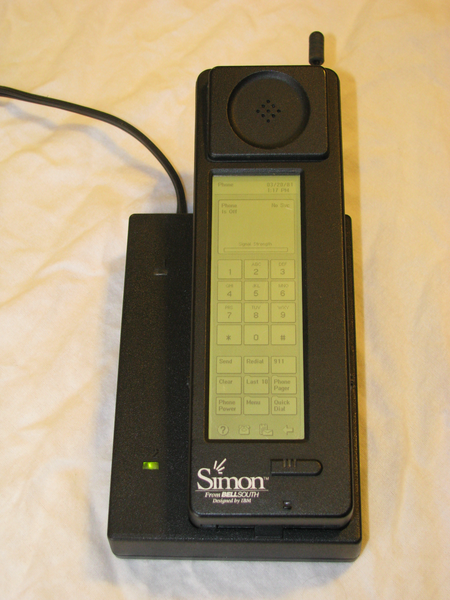
Image via Wikipedia
It's really time for a new one

As I was saying, it’s never been as hard to choose a phone as it is now. This is far from a bad thing though; we’ve never had so many incredible choices. Phones have changed almost beyond recognition, from fairly straightforward communication devices into something we don’t even quite have a name for yet.

Certainly the term ‘smartphone’ no longer seems adequate. Though there were earlier experiments¹, the smartphone came into its own all of ten years ago now, when the mobile phone and the PDA were successfully merged by companies like Nokia and Microsoft. The magic ingredient: A proper operating system that allowed you to install software.

Since then, other functions have accrued continually. Cameras, Web browsers, e-mail, media players, Bluetooth, GPS, Wi-Fi… Keypads became tiny to make room for Internet-friendly screens. Some – Microsoft in particular – introduced touch interfaces, but made them so crowded that they had to be navigated with a PDA-type stylus. The smartphone seemed full to the point of bursting.

Then Apple made the next great breakthrough, by introducing an interface that was not only sensitive to broad gestures, but which was utterly reconfigurable by whatever program was in use. At a stroke they solved the problem of the smartphone trying to be too many things, by reinventing it as an almost neutral object that could be reconfigured for an endless variety of tasks.

At the same time, they realised that what was essentially an Internet-connected iPod was a fantastic tool for selling things to people; music, video, the software “apps” it would run, and the services those apps could interface with. It was a goldmine. The other main players were slow to recognise this; Nokia and Microsoft so tardy that eventually they had to join forces. Only Google, the one with no previous involvement in phones, could see what was happening and knew what was to be done. They produced Android, now the leading rival to the iPhone.

But far from the only one; there are four or five competing systems, all with their strengths and weaknesses. So though we have great choices, they are real choices. Where once we might have chosen based on fairly trivial factors like appearance, buying a phone now means buying into a system – an ‘ecosystem’ as some call it – of software apps and services. It’s quite a commitment.

By weighing up the strengths and weaknesses of the various offerings however, it shouldn’t be too hard to tell which is the one that suits your needs. These we will look at in more detail tomorrow.

  1. The first real smartphone? Probably the Simon from quiet innovator IBM (pictured above). It may have been an ugly brick, but it was an ugly brick that was years ahead of its time.