If you wonder why our EU partners want our taxpayers to pay off the loans of a failed private bank, just look who it owed money to – some of the biggest names in Europe. If we don’t prop them up, how many will have to be bailed out by their governments? (Cut-out-and-keep guide to Anglo bondholders by politico.ie)
Listening to Michael Noonan yesterday worried me for a number of reasons. Firstly, because he’s Minister for Finance. That never strikes me as an ideal arrangement. Worse though, he sounded worried and downcast. This on the day when, at long last, it looks like we’re going to get some deal on the bank debt burden. That’s supposed to be about the best news you could possibly hope for.
If you’re a Noonan, that is. In a world where there is no choice but to force the taxpayer to reward the speculator, the best it seems we can hope for is to get the immediate liability for those bond repayments converted into a long term loan from the European Stability Mechanism (ESM), so taking away the looming danger of default. This will improve our credit rating, meaning we’ll be able to borrow the money to repay the bank debts all by ourselves. Whoopee!
Yeah. No wonder he sounds depressed.
The even less joysome part is that there is clearly going to be no write-down. Arguably in fact, the new mechanism will mean that we’ll be closing off any future possibility of burning the bondholders because now the debt will be to the ESM rather than the reckless lenders themselves. So less of a deal, more a sort of… trap.
In or near Galway? Doing anything on Sunday afternoon? Like free entertainment? Enjoy comedy?
Good. Those are all nice things.
Wait, yeah. There’s a free comedy gig in Kelly’s Bar in Bridge Street at 3:00pm Sunday. Comics Abie Philbin Bowman and Aidan Killian are touring the country in protest against the bank bailout. You’ve got to do something.
Stand Up Against the Bankers is a show fuelled not by profit but goodwill; no accommodation has been booked in advance and tour dates are determined in large part by the willingness of a community to host the pair. The audience is invited to attend free of charge and get into the meitheal spirit by supporting however they can. Some will cook them dinner after the show, someone else will put them up in their spare room. Some will throw a few quid into the hat and some will help to publicise the next leg of the tour. Aidan Killian explains:
Touring like this creates a different kind of relationship with the audience. We’re not asking them to buy a ticket in advance. And we better make sure our jokes are damn funny. Otherwise, we’ll end up sleeping in the car, eating nettle soup.
Aidan Killian, a former banker with the once prestigious (now disgraced) Bear Stearns, saw the writing on the wall in 2007 and decided to do something he believed in. He left the job, still carrying a huge mortgage for a house in Florida he has never seen. With his understanding of how banks had cheated the system, Aidan turned the tables and forced the bank to accept their liability for the property. This story forms a key part of his comedy set.
Abie Philbin Bowman took the 2006 Edinburgh Fringe by storm with his debut, “Jesus: The Guantanamo Years”. His one-man comedies have since toured from London’s West End to Hollywood LA to Lahore Pakistan (during a State of Emergency). His jokes have been taken seriously by everyone from the Ku Klux Klan to Al Qaeda.
Abie spent the Celtic Tiger era pursuing his comedy dreams. He couldn’t afford to buy or rent a house, so remained living at home with his parents. He recalls the day the financial crisis broke.
It was awful: people were in negative equity, losing their jobs, facing repossession… At some point, I realised: ‘Hang on. I don’t own a house. So I’m not in negative equity and nobody can outsource my job to China.’ Somehow, I had gone to bed, a textbook loser… and woken up, an economic genius.
The two stand-ups travelled to last year’s Edinburgh Fringe Festival with solo shows on Ireland’s financial crisis and won rave reviews. They wanted to tour Ireland, but realised the country was broke. Explains Abie:
The financial crisis makes us all feel powerless. Every time we spend money, we’re paying tax, which is used to bail out the banks and pay off the Troika. But the Troika can’t tax barter, or generosity, or laughter.
Admission is free as they say, but please give them some money anyway. Otherwise they may eat all my food.
The Galway dates in full:
Campbells Tavern, Cloughanover, Headford on Friday June 22nd at 8:30pm
The Hop Inn, Athenry on Saturday June 23rd at 8:30pm
Kelly’s Bar, Bridge St, Galway on Sunday June 24th at 3pm.
And I’m doing that thing where I upload a completely unrelated picture again. This is a secluded inlet of Lough Corrib.
Is that enough for you now?
It’s time we admitted this; Ireland is not a soccer-playing country. We’re a top nation at rugby, we’re way ahead at boxing, we’re number one in the world at hurling – and second only to Australia at Gaelic football. But at soccer, we are best at losing. Hell, we do better at cricket, a game most Irish people freely admit they neither like nor understand. We like soccer, we’re just – and there is no kind way to put this – really, really very bad at it. We got lucky once in 1990, scraping through to the quarter finals on draws and penalties. That was the best we ever did. It is the best we’ll ever do. We are complete and utter cock at soccer. If I haven’t yet made this clear enough, we are not good at playing the association football. OK?
So we should stop. Nobody makes us enter these international competitions, and we only embarrass ourselves when we do. Like Costa Rica with their army, we should be the first nation on Earth to disband their international team. The world will thank us.
But what about the fans? We are at least a great soccer supporting nation. Though only, and this is weird, on the international level. At the club level we’re hopeless. Top league teams in Ireland find themselves playing matches in front of a man, a dog and a boy. The average Irish fan spends far more on the merchandise of one of the giant English corporate teams than they do on actual, you know, soccer. (And perhaps this is the root of our malaise as a soccer-playing nation but you know what? I don’t care.) Yet when it comes to international games, apparently seasoned fans turn out in hordes. And they can really sing. OK, they only ever seem to sing the bleeding awful faux-traditional Fields Of Athenry, but they do it with gusto.
They could take up following a sport we’re actually decent at of course, but soccer is the great game, when it comes to the game supporting game. If you follow. They will still want to compete at that level.
So I say, why not freelance? Ireland’s greatest export has always been people, but they haven’t always been labourers, or construction workers, or nurses, or bankrupts. Ireland was once famous for her mercenaries. During times of economic downturn when we didn’t have enough war at home, people made a good living in foreign armies. I see the soccer fans fulfilling a similar role, for countries in dire need of some pizazz in their fanbase. Ones with more money than people – Luxembourg, for example. Liechtenstein. Monaco. It could be both lucrative and fun.
And at least they’d have a chance of bloody winning occasionally.
Only now can the story be told – because since I got back I’ve been too shagged. How did I become involved with the Ballyhea Burn The Bank Bondholders band? I have to be honest, I am not altogether sure. It sounded like a wild thing to do. It was a noble cause. It would mean spending time with one of my favouritest people. I had some time, flights were cheap, what the hell.
Our journey begins as it ends – in Knock. Knock is one of the world’s weirdest little airports. It has a runway long enough for 747s, but it is miles and miles away from anywhere almost anyone would want to go. The nearest cities are Galway, Limerick and Derry, but the closest of them is an hour away and they all have their own airports anyway.
Knock was the brainchild not of a planner or politician, but of a priest – who thought that the site of a minor and, it has to be said, suspect apparition could become a major destination for pilgrims, if there were only an airport to bring them. But the maxim “If you build it they will come” applies poorly to superfluous infrastructure. Knock had to wait for a new miracle and a new prophet – Michael O’Leary of Ryanair, who knew how to put unwanted airports to good use. So from Knock, an hour away from Galway, we can fly to Hahn, two hours away from Frankfurt. It’s a very useful service – and not only for us, as we were to find.
Knock though is well worth visiting for itself, if you enjoy mocking people’s beliefs. Perhaps I can find a better way to put that… It’s fascinating, because it displays religion at its most incredible. The town of Knock is more or less a religious strip mall, selling objects of veneration in boxes of a dozen beside charming isn’t-drunkenness-funny souvenirs. It’s hard to imagine how anyone’s faith could survive a pilgrimage here.
I would swear that religious art has just got more dumb-looking in recent decades. These figures seem actually to have concussion, the features weirdly cartoonish and toy-like. The 3D pictures of animals are… unexplained. Virgin Marys now come in Standard and Luminous. I resisted the desire to buy a luminous one.
I do not know what a Happy Death Cross is, or how it differs from the usual sad death type of crucifix. We speculate that if you look close, Jesus has a big smile.
So we tear ourselves away from the anthropology just in time to meet up with the Ballyhea folks at the airport, and board our flight. Though not before paying an extra €10, for Knock is a toll airport.
Aboard then, and of course the first thing that greets you is Ryanair’s extraordinary panoply of warnings, right in front of your face. They know that the usual safety cards are often damaged or taken as souvenirs (seriously, I have a friend who collects them), so to save a few cents every flight Ryanair plaster them to the back of the seat in front of you. You spend your entire journey being constantly reminded of the things that can go wrong with a plane.
And I ask you, if you didn’t know all the safety drills already, would you really be able to work them out from this? What the hell is that guy doing with the yellow vest – the hula? And look at the first panel of “Exit B Overwings”, the bottom row of the right side. The whole point of doing this in pictures is so you don’t need to read English to understand the drill. But without that caption, the picture seems to say “If you look out the window and see fire, stay in the plane”. That’s really only good advice if you’re flying through a fire.
Gotta say, plane wings are lovely things.
When we boarded though, someone noticed a thing that took us all by surprise. Among our fellow-passengers was one of the people we were hoping to meet in Frankfurt – Doctor Patrick Honohan, the governor of Ireland’s Central Bank, on his way to the very meeting we were going to picket. This, I admit, was troubling. Were we so broke that our Central Bank Governor had to fly Ryanair? It seems almost shameful. Of course to his credit, Honahan had recently turned down a pay rise in the hope, naive as it might seem, of business and public sector leaders following suit. So perhaps this was another example of economy.
It is good to have a clear plan for getting out of debt, and it is eminently reasonable to have a budgeting agreement between countries sharing a currency. We should all be playing by the same rules if we’re sharing the risks and benefits.
Just not these rules.
Let’s leave aside the pros and cons of the ESM if we can. Even if we never need it – and I don’t think we will – we should join it anyway; to support other vulnerable Euro members and discourage market speculation against the currency. We shouldn’t be looking at this mechanism as if we’re desperate to join. It’s a mutual benefit scheme that we should contribute to – if we can.
But if the price of joining the ESM is this Fiscal Compact, then the price is too high. And I don’t mean too high for what we get in return. I mean too high as in we can’t afford it, full stop.
Even if the ESM were a free rainbows and ponies club, even if membership entitled us to have cash sprayed over us from a hosepipe, we cannot join if we don’t have the price of admission. And we simply don’t.
We have a vast budgetary shortfall, imposed on us by the appalling financial mismanagement of the last government. Since then however we’ve been top of the class, attacking spending with a chainsaw, losing that deficit as fast as humanly possible. We’re suffering for it. We’ve seen employment, health services, education and welfare devastated. We gave away our pension reserve to save other people’s pension funds. But we have made exemplary progress.
The Fiscal Compact – which we join if this referendum is passed – requires us to redouble that cutting.
Look at the state of our public systems now. Imagine if we made cutbacks at nearly twice the current rate. I mean that, imagine it. What would it be like? What would you do, in a country like that?
Get out, mainly. Anyone who can will. We’re going to haemorrhage young, basically. The rest of us… Well, we’re pretty much buggered. We’re going to see an already shrinking economy fold like a ruptured Zeppelin, as further destruction of the tax base turns a nascent recovery into a plughole pirouette.
We’ll be another Greece.
Deficit spending can often be the wrong thing to do, a too-easy option in difficult times. But sometimes it is exactly the right thing, and it has paid off in the past. The Fiscal Compact however means that we can never do it again. No matter what the people vote for, no matter who is in government, even if we can borrow from other sources. It’s an economic straitjacket, one that no country could put on and still call itself free.
What’s more we have to force ourselves into that straitjacket, in far less time than is reasonable, humane, or indeed possible. If we pass this referendum we will be making a commitment that we simply cannot keep. We will be fined for being broke.
This Fiscal Compact was not designed for Ireland’s circumstances, but to stop major Euro economies like Germany and France from doing again what they did wrong before. It will punish us not for our sins but for theirs, prescribe diarrhoea medicine when we’re constipated, bring a wrecking ball when we need scaffolding.
Reject a treaty that will be our worst mistake since the bank guarantee.
But I shouldn’t say “give away”, as if it wasn’t earned. This money is a reward! It’s what we give to investors for making decisions that destroyed our economy. They bet that a property market can keep rising until every building is worth an infinite amount of money. The banks they invested in, quite naturally, went bust. We own these banks now, and we’ll all be working extra-hard for the rest of our lives to pay for those decisions. Though on the bright side we will be able to afford less health care, so our lives will be shorter.
All just to make sure that no matter how mindlessly, droolingly, shit-flingingly stupid the decisions they make, the richest people stay that way.
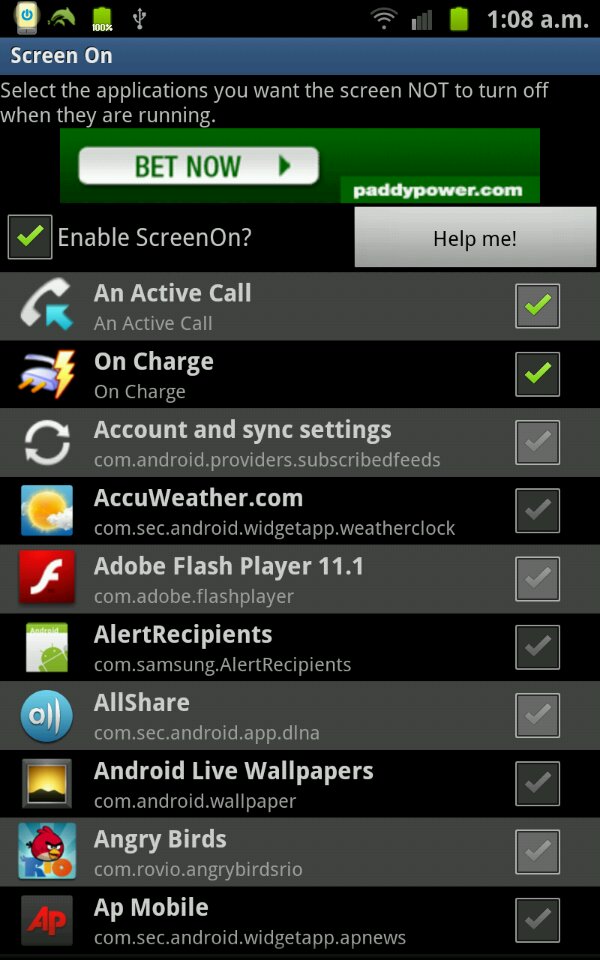
One thing that bugs me about Android is its eagerness to turn the screen off. Yes of course it’s a good idea for battery saving. But it’s less good for, say, reading. You can set the screen timeout delay for a maximum ten minutes, but sometimes even that’s not enough.
Especially when driving. Not that I read a lot while driving, you understand, but I do like to use the Maps app. Sure, that will keep the screen on when you use the navigation function, but to do that you need to enter a destination. What about when you don’t have a destination?
All right, not everyone is as weird as me. But sometimes I like to just drive around in places I don’t know. For example, today I decided to find how far south I could drive along the shores of Lough Corrib before impassable bog forced me back onto the main road¹. I’ve been wondering for years, but it’s the sort of thing you never find time to do in your adult life – until you get a day so hot that spending it driving around with all your windows open actually seems like the sensible thing to do. So I wanted a moving map, to make sure I was sticking to the shores and/or heading south, and I wanted to be able to read it at a glance, not be always unlocking the screen. But I had no destination to enter.
So I pulled over, searched Google Play, and found Screen On, a simple app from Greek company PinApps that lists all the other ones installed and offers the option of keeping the screen on while any of them is running. Lovely. And it has a couple of other cute features too – it can also keep the screen on while you’re taking a call. That sounds like a good idea, I’m frequently annoyed by the delay between ending a conversation and being able to hang up. I’ve yet to decide how well it works in practice though.
Better still, there’s an option to keep the screen going while charging. This was an available behaviour I opted into on my Nokia N900, because it kept the screen on whenever I was using the phone in bed or in the car. Some caveats though: Screens have finite lives, and I believe this is particularly true of OLEDs. Also, one as big as that of the Galaxy Note draws a formidable amount of power. If you leave it burning overnight, particularly if you have other stuff running too or if you’re not using a charger capable of the recommended 1Amp, you may find it hasn’t finished charging by morning! For these reasons, you should remember to manually switch the screen off by touching the power button.
But a great little app that does exactly what I wanted. The only way I would improve it is by having some contextual logic. I’d like it to keep the screen on, when I’m using a certain app, if the phone is on charge. That way there’d be a lot less risk of my flattening the battery through negligence.
Oh the trip? It was a lovely adventure, exploring a maze of boreens that had a nonchalant attitude towards the task of going somewhere. I saw nearby bits of country that I had no idea existed. At one point I drove a quarter of a mile down a narrow lane that just petered out, and so had to reverse all the way back. How often do you get to do that? But the answer to the actual question is that you can hardly get any further south along this shore of the Corrib than I am right here at home. As is fairly obvious from any map.
Afterwards I went to town – by the main road – and bought a big floppy ladies’ straw sun hat I found in a charity shop for a euro. It was quite clear that too much of the sun has been getting through to my brain.
The curraghline. Built directly across a spongy bog and therefore liable to constant subsidence and crinkling, it has been described as “Ireland’s straightest and most uneven stretch of road”.
Cat is sure that Tree didn’t use to be that colour
Good grief.
I’m being blinded by the light reflecting off my own skin. Thanks to last year’s wholly ineffective summer, I haven’t been struck by the cancer-particle for an age. What melanin I ever possessed is long gone, chopped up for firewood or something. I am now little more than a collection of human organs in a see-through bag.
But le soleil tapait dur, as they say in French lessons. I received more dangerous photons to my surfaces yesterday than I have in the last two years, and I include X-rays in that. So while some areas of me are transparent, others are luminous. First I was at a funeral, and so got basted in sunspit before I was even ready to contemplate the idea. Very few people pause at the graveside to apply sunscreen. Then driving home I had the windows down. Only a 100kph wind was sufficient to refresh me, and it was amazingly relaxing to be basking and buffeted at the same time. A thrillingly sensual experience, like bathing in a hot air jacuzzi. I arrived home scorched.
And now I lie on a lawn, hoping to make my other parts match. I am supposed to be composing my blog here but, though I try to write in a personal way, nearly everything that has happened in the last few days has been so intensely personal, either for me or for someone close to me, that there is little on my mind that I can fairly write about. I am emotionally drained and of little use today. And so I make myself useful.
Inside, ladies of the superior generation are discussing whatever it is they discuss when I’m not there. My mother and one of her sisters, visiting another sister at the house of a cousin who… You know I’m not even sure where I am. I just drive. I am the ferry of aunts. And happily so. In the sun, the world is made of simple things.
Let’s have a break from the politics and return to the quiet beauty of the Claddagh, Galway’s historic fishing village.
Sunset in the Claddagh. The rightmost of the buildings we used to call the Claddagh Bank, back when it was a social welfare office. Before that it was the Piscatorial School, an institution for the education of fisher-folk.
Where there’s boats, there’s ropes. Or sheets, as sailors call them. In turn, sailors call sheets “sails”. This is where they get their name. I should get PhotoShopping on this to bring out the contrasts, but I’m really tired. This was at the start of a walk that ended up taking three hours.
A similar angle to one I took last time, but now the higher tide completes the illusion.
Sign Of The Times. Geddit? God I’m Stuck For An Illustration Today
Yesterday’s post about Ireland’s alternatives to the ESM elicited such a bunch of interesting questions it would really take all day to answer them properly. So that’s what I’ll do.
I found a disturbing little nugget in the fourth paragraph of Paul Gillespie’s opinion piece in the Irish Times on Saturday – In effect, if we vote NO to the treaty, not only will we not be able to draw down funds from the ESM but we will still be obliged to contribute to its initial capital. I think Vincent Browne may have alluded to this double-bind on his show a couple of times but I’m only just realising the implications of it.
I’m assuming that this was agreed before the AG dropped the bombshell of the requirement for a referendum and that the government had assumed they could push the treaty through the Oireachtas unchallenged. Whatever the reasons it puts us in an invidious position with regard to the ESM in the event of a NO vote.
True, but having a chance to claw back what we pay in is hardly a good reason to vote Yes. Really, this is a much better argument for not ratifying the ESM treaty at all.
Which is still an option (even leaving aside the Pringle case, which may yet decide that they can’t ratify it without another referendum), and I think this amendment failing would provide the government with the perfect pretext not to.
They may well do it anyway though – to bolster Ireland’s boy-scout europhile reputation (what good did that do us again?) and to not rock an already waterlogged boat. €1.27 billion over the next three years seems almost like small change compared to our deficit. Though of course that does rather overlook the fact that we’re liable for anything up to €11 billion – in the unlikely event of anyone, you know, actually needing a bailout.
Regular reader Azijn from The Netherlands said:
You mention several times that under the ESM you wouldn’t be able to “invest in growth”. I don’t really understand what you mean by this. What is the precise ESM policy that prevents this? I thought it was mainly a severe constraint on the budget, with very strict rules about the size of deficit spending. (Just like the IMF would).
To deal with this bit first: The EMS – or more correctly the Fiscal Compact we must join to enter it – will compel us to cut government spending at nearly twice the pace we’re already slashing away. Even leaving the immediate human cost aside for a moment, this will have the effect of further shrinking the economy, further reducing the tax take… A vicious cycle looms.
The way to break that cycle would be to borrow and spend as soon as possible to stimulate growth; classical Keynesianism. The IMF – or of course commercial lenders – would have no ideological objection. The Fiscal Compact however requires that, with some leeway for cyclical fluctuation only, governments borrow no more than 0.5% more than income. In other words it bans Keynesianism in perpetuity, for no better reason apparently than German mistrust of it (as I discussed here).
Aside that, you provide a very clear analysis of all the options. It’s sadly clear that all the options, including your preferred one, have major downsides. There’s no silver bullet for the economic problems of Ireland. Or Europe, for that matter.
Especially, because it’s not just conjuncture and aftermath of the mega-losses in the housing and financial markets. A big problem is that while all this is going on, all European countries are concurrently facing the huge (huge!) increases required to simply keep up expenditures in healthcare and retirement funding.
That’s where the biggest pain of ‘austerity’ is felt, but I always find it a tough topic. On the one hand, it’s easy to depict those cutting in the healthcare and retirement budgets as “robbing the sick and elderly”. On the other, it’s a reality that these (often overlapping) groups are experiencing skyrocketing costs.
If any of the “nuclear” options, such as leaving the Euro are chosen, these people will _still_ be among the hardest hit. Also, is it fair to ask younger generations to display solidarity for the elderly, but not ask it all of the elderly?
Well I’m seeing it quite differently. The sick and elderly are my highest priority, and I wouldn’t be suggesting these nuclear options unless I thought they would be better for the vulnerable in society than the merciless constraints of the Fiscal Compact.
Our economy is healthy by the measure that matters most – balance of payments. We ought to be able to raise more money to prevent the sick and elderly getting the brunt of this. To a great extent, it’s Euro membership that is tying our hands. A major factor scaring lenders off now is the possibility that the Euro could collapse, or that we’d crash out of it. If we get that over with, we suddenly become a far more attractive risk. (And of course, our balance of payments gets even better.) It would be hugely disruptive and scary, but very probably preferable to slow economic constriction.
I don’t know what you really mean by solidarity on the part of the elderly though. We’ve already raised the retirement age, I’m not sure what more they can do. Unless you’re subtly suggesting we try legalizing assisted suicide here…
I answered this one yesterday, but I include that here, with a little expansion, for completeness. Hilary Chapman (no known relation) from the UK asks:
Would it not be best for Ireland to share the currency of Northern Ireland, Scotland, Wales and England, i.e, the pound / punt? Ireland’s economy is so tied up to that of its near neighbours that the euro is an aberration.
That would be a hugely retrograde step. The old Irish pound was pegged to the UK pound from independence until the mid-70s – not exactly an era of sparkling economic performance. A currency union tended to steer business towards or through the UK, only exacerbating the geographic disadvantage of having a larger country effectively sitting between us and the wider world.
So the general thrust of policy for decades has been to untie the economy from our nearest neighbours! Mainly, by finding new trading partners. (And whatever about its downsides, the Euro has definitely been a help in this.) Decades of separate development have made the UK’s importance for trade much smaller than you may think.
You will see shops in Ireland full of UK brands (and indeed, high streets full of UK chains); we certainly do still import a huge amount of retail goods from there. But that may give a misleading impression. From getting virtually 100% of our imports from the UK at independence, we now source less than a third there. In exports we send more goods to the Eurozone, and the US has long overtaken the UK as our single biggest customer.
We may have troubles right now, in other words, but there’s really no going back.
* * *
If we do leave the Euro we would first of all devalue significantly of course – but then I think we’d start shadowing it again, with a view to eventually rejoining. I would certainly prefer though if we could rejoin – or stay in – a much modified Euro. One better geared for the benefit of the EU as a whole, less engineered for Germany’s particular insecurities.
I do sincerely sympathise with German concerns however. Inflation, in post-crash circumstances not so different from those now, is seen as a major contributing factor to the collapse of democracy in the 1930s. But preventing the currency inflating doesn’t make the causes of that economic dysfunction vanish. In inter-war Germany, these were largely the heavy burden of debt and restrictions on self-determination imposed on the country by its neighbours, whereas now…